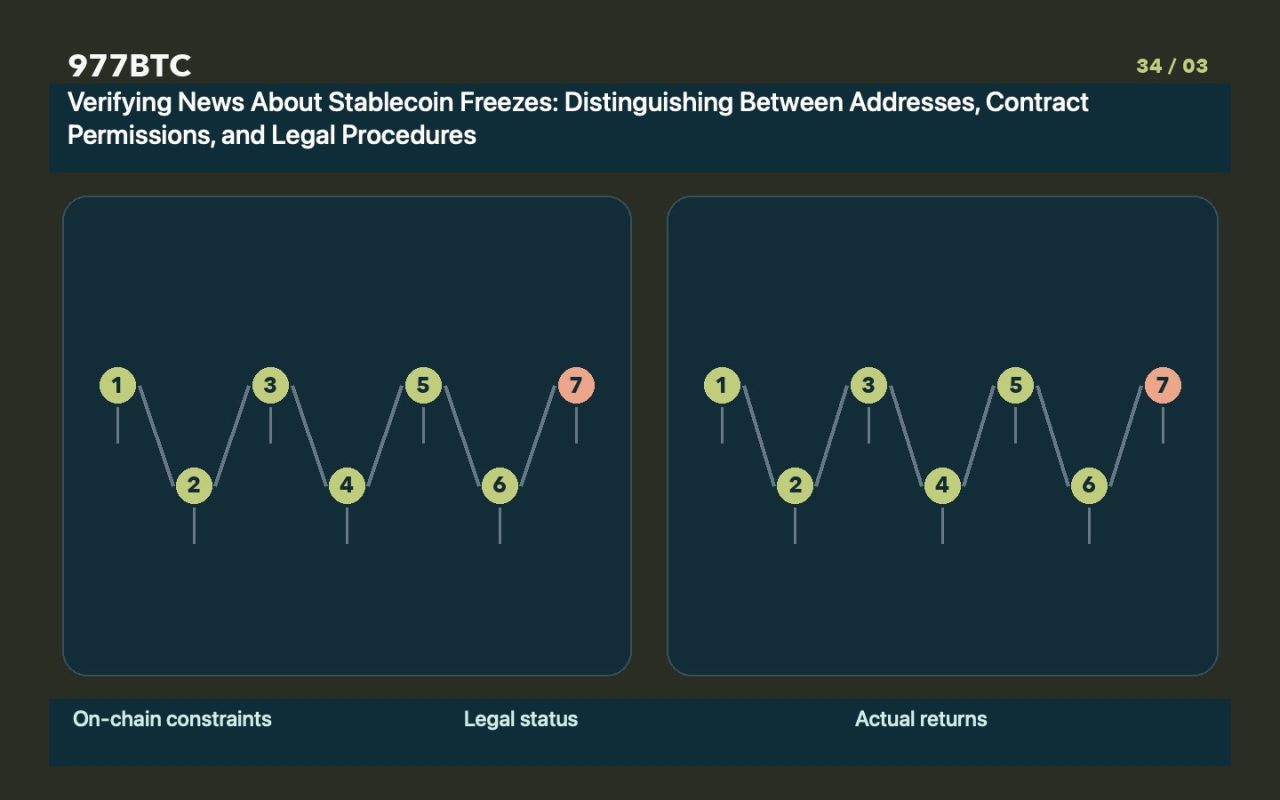
"Freezing" is not a monolithic action.
A "freeze" mentioned in reports could refer to restrictions at the smart contract level (by the issuer), limitations on platform accounts, control over bank funds, or actions taken pursuant to a judicial order. First, determine the layer at which the action occurs, then record the assets, network, address, and timestamp. The invocation of an on-chain function does not equate to the completion of a judicial confiscation, nor does a platform’s temporary restriction on withdrawals mean that assets have been returned to victims. News reports should avoid conflating these distinct states into a single, ambiguous statement.
On-chain contract actions require verification of the actual entities involved.
Confirm that the token is on the correct network and associated with the correct contract; verify whether the transaction was successful, which methods were called, and which addresses were affected. Token implementations and contract versions vary; one cannot assume that all balances have become immovable based solely on a method name. Blockchain explorer labels are merely supplementary information—the identity of an address owner and their legal status require additional evidence. Do not present unverified on-chain attributions as criminal accusations.
Issuer statements and legal documents serve different purposes.
Announcements from an issuer may explain their cooperation with an action, while judicial documents may detail investigations, court orders, or the progress of a case. When citing such information, specify the issuing institution, the type of document, the date, and the relevant jurisdiction; carefully distinguish between allegations and established legal facts. While a case is still ongoing, investigative findings should not be treated as a final judgment, nor should estimated figures mentioned in press releases be automatically assumed to be the final recovered amounts.
Risk of double-counting in financial statistics
The same set of assets may appear repeatedly across various addresses, platform announcements, and judicial documents. When compiling statistics, it is essential to distinguish between asset types and quantities, valuation dates, the scope of frozen assets, and the extent of actual control. Before aggregating figures from multiple reports, verify whether they refer to the same incident. Furthermore, price fluctuations and exchange rate changes can alter valuations in fiat currency terms; such shifts should not be misinterpreted as additional recoveries or further losses.
What affected individuals should retain
Affected parties should preserve their own transaction identifiers, platform support tickets, account notifications, and publicly available case documentation, submitting them through official channels when necessary. Do not post identity documents or complete fund-flow details in public comment sections. Be wary of any individual promising to lift a freeze, guarantee the recovery of funds, or requesting your private keys in exchange for a fee; always verify such claims independently. Do not assume that an individual claiming to act on your behalf is authorized simply because they mention the name of an organization that has appeared in news reports.
Tracking status changes in follow-up reporting
Timelines should separately track on-chain activity, official statements, judicial proceedings, and actual asset returns, while clearly flagging items with unknown ownership or unverified amounts. Subsequent unfreezing or adjustments should not overwrite original records; instead, they should be appended as supplementary information. This document provides a methodology for categorizing evidence; it does not confirm that any specific address is involved in illicit activity, nor does it offer legal advice for individual cases or guarantee the recovery of funds.